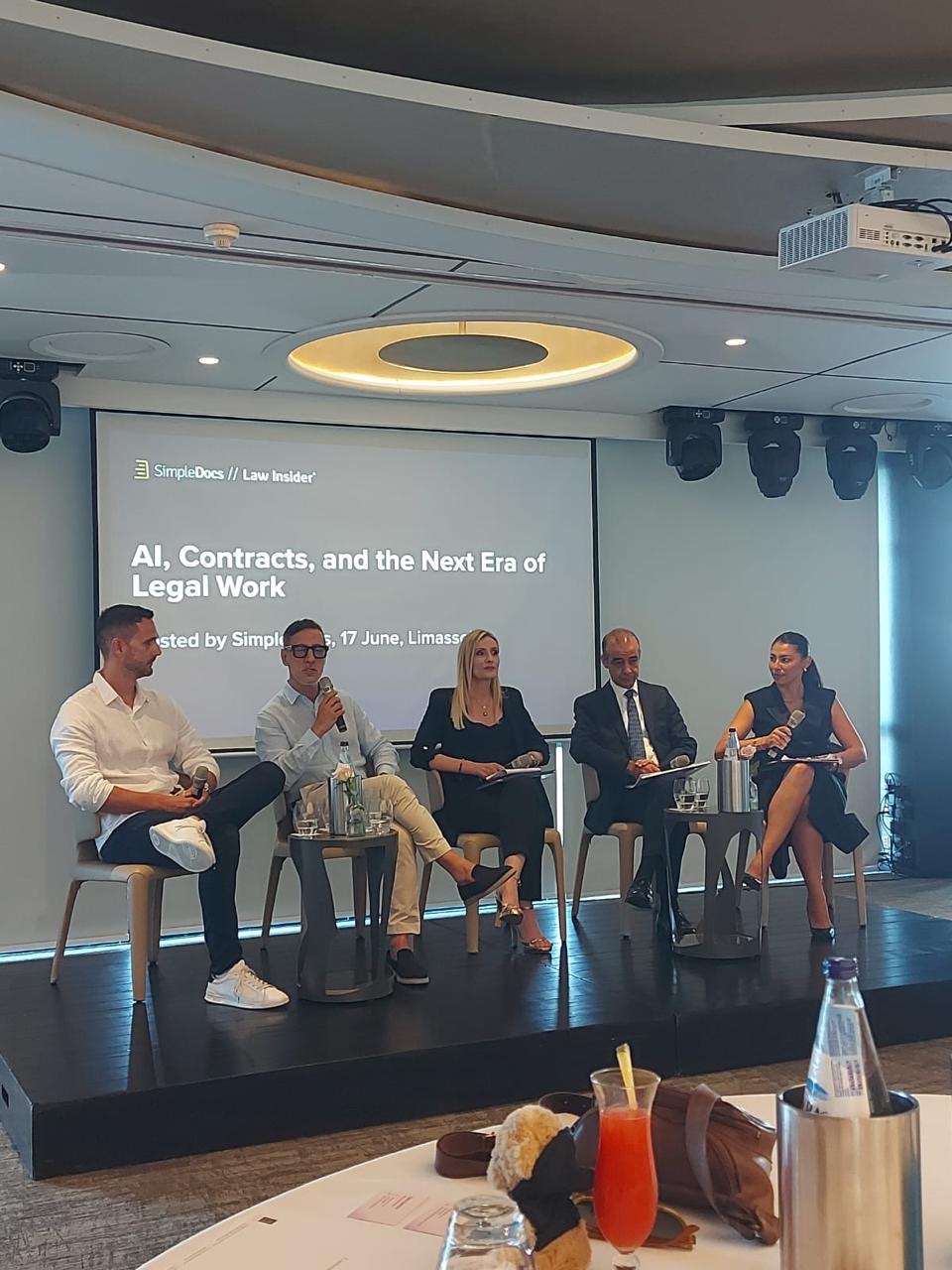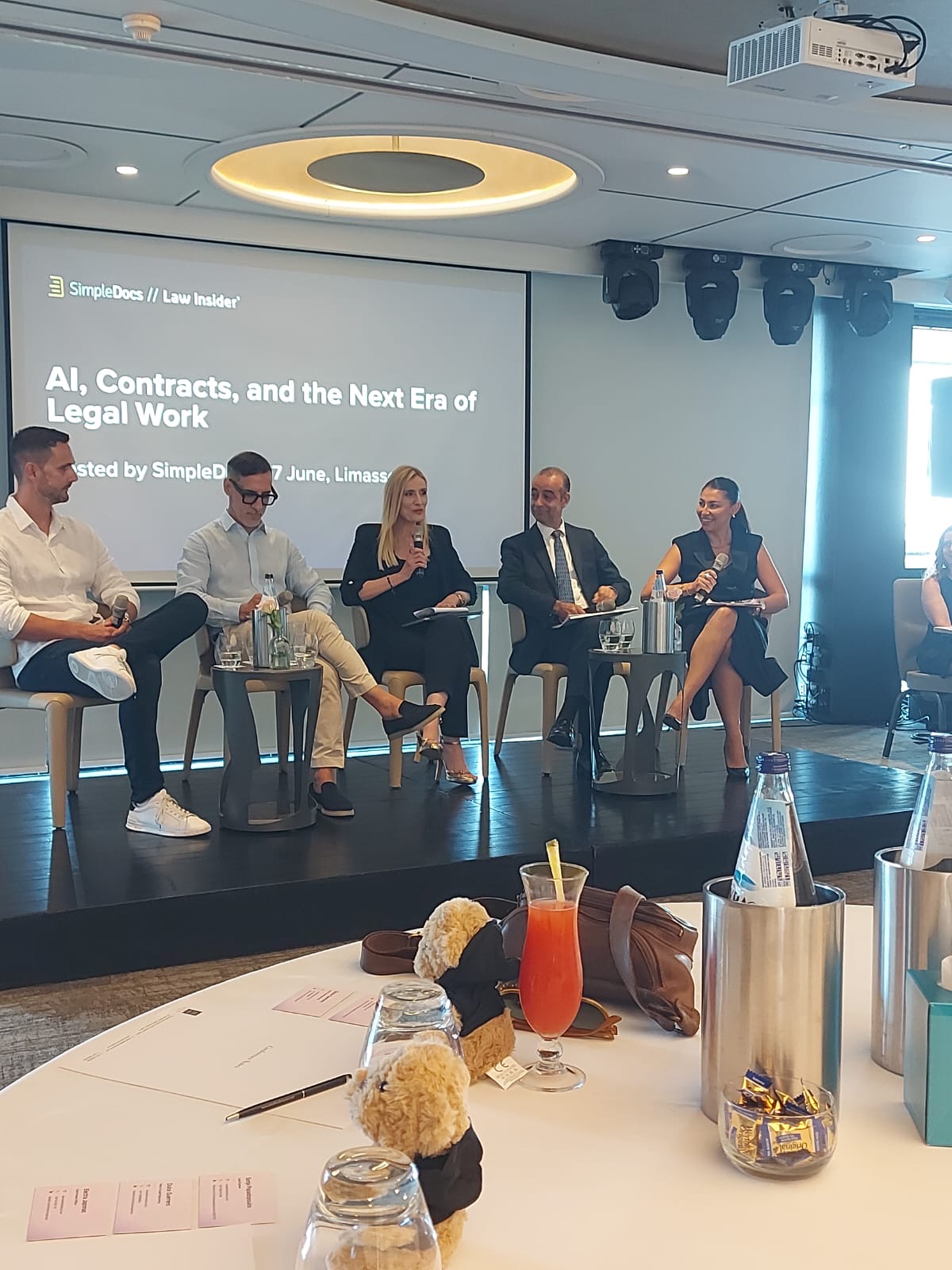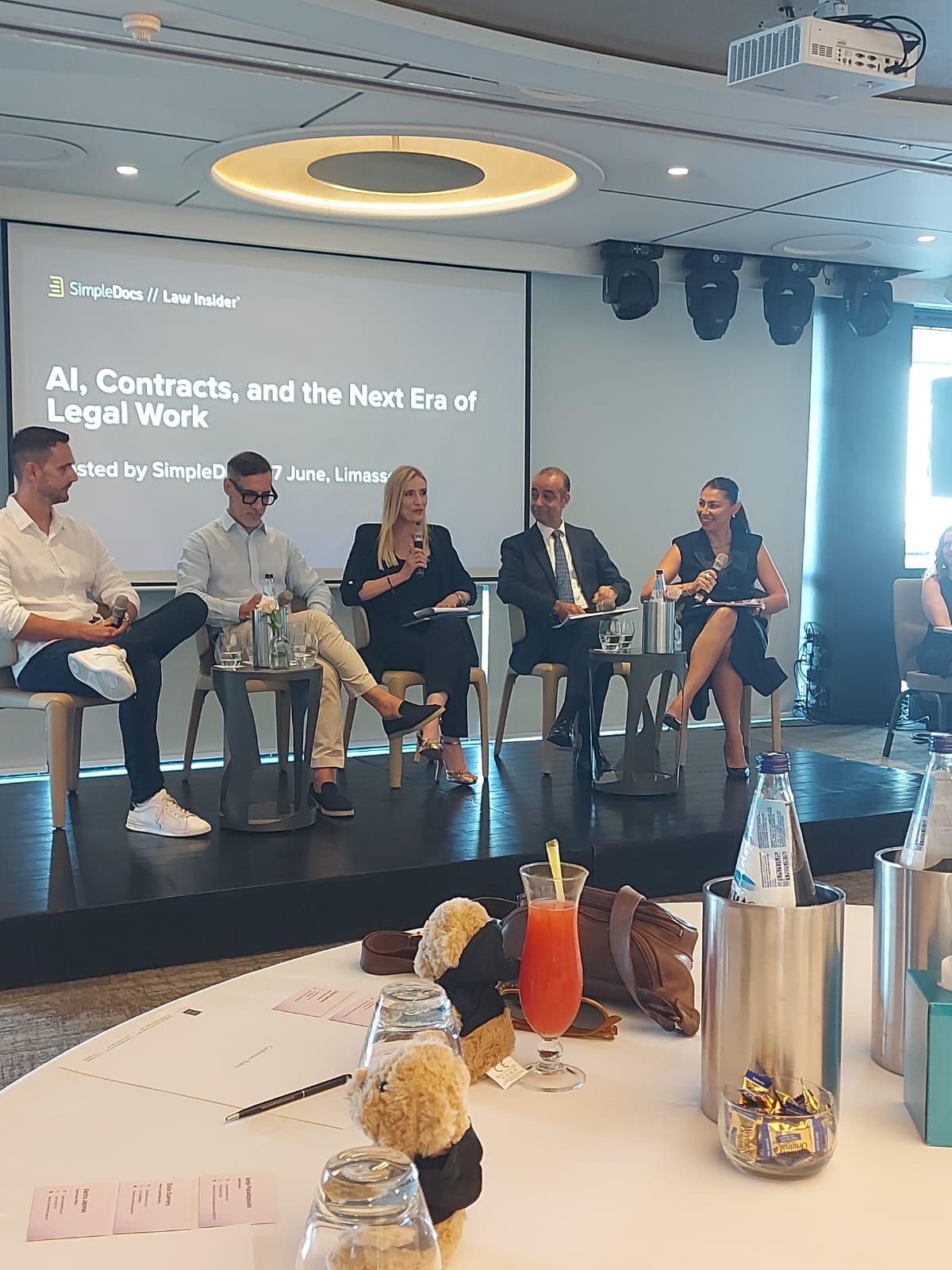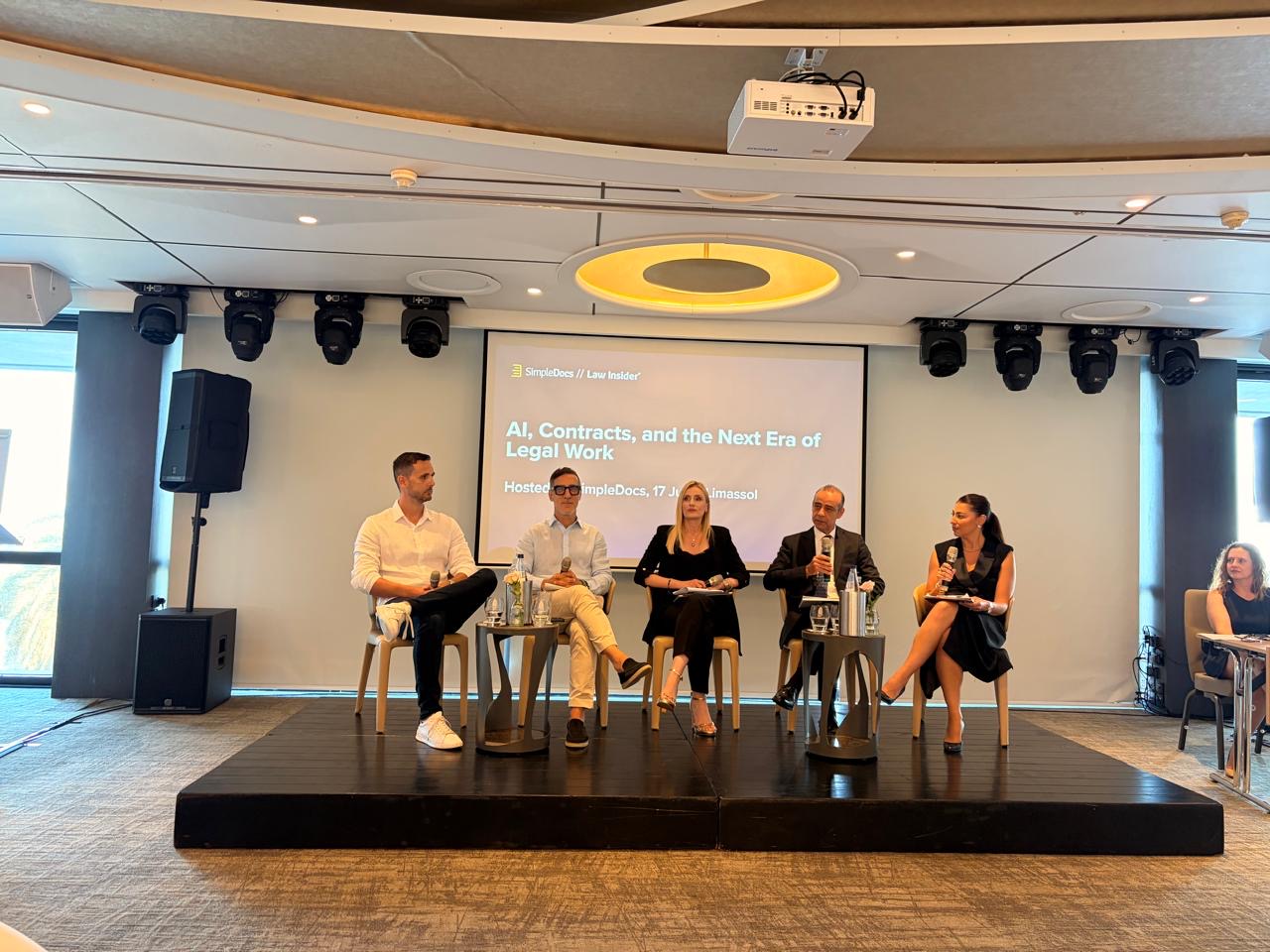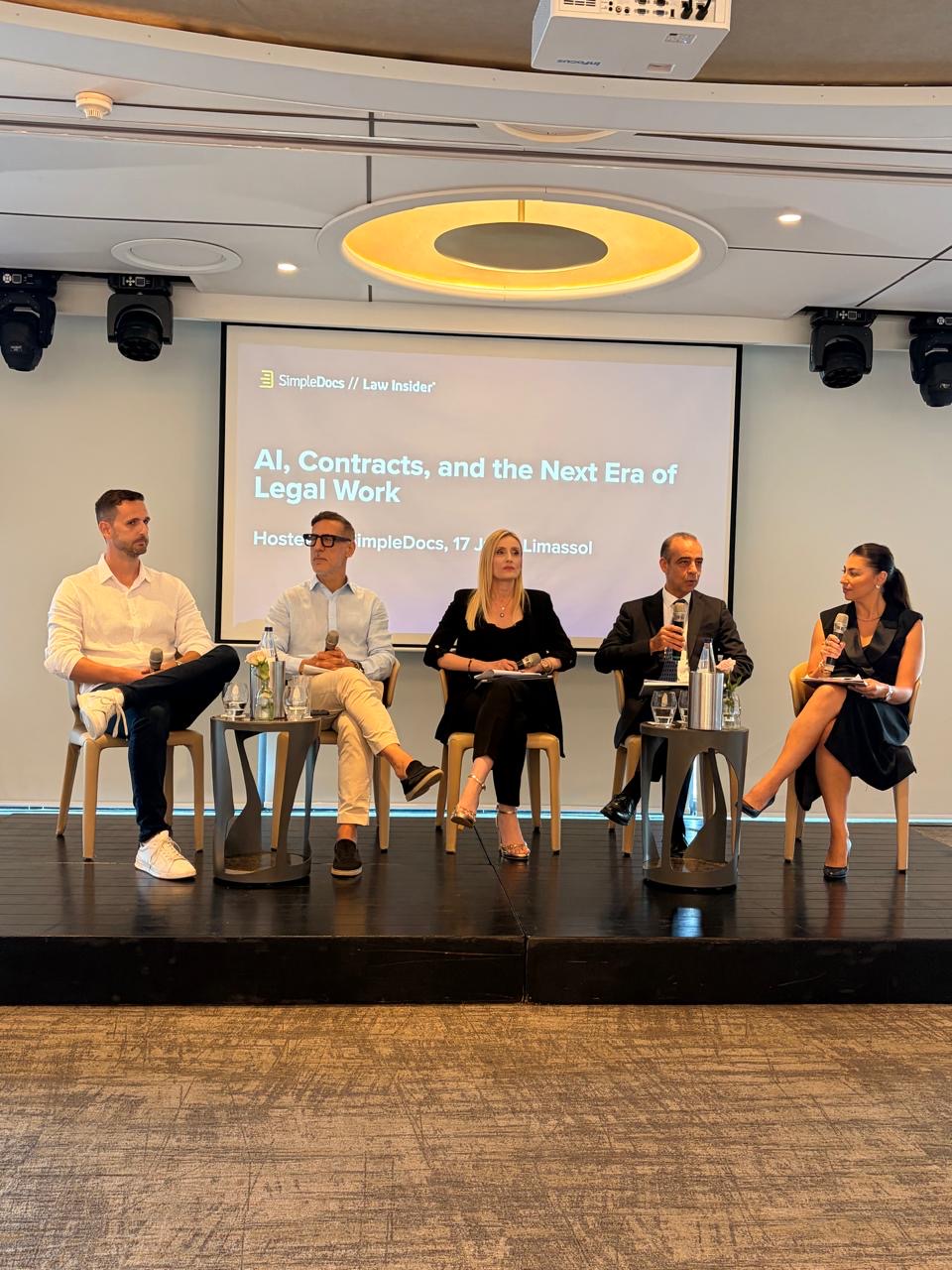


Elias Neocleous, Managing Partner of Elias Neocleous & Co LLC, recently participated in an invitation-only panel discussion hosted by SimpleDocs, titled “Navigating AI: Contracts, Regulation & the Future of Law”, held in Limassol. The event brought together legal, government, regulatory and industry leaders to explore the transformative impact of artificial intelligence on legal services, business operations and regulatory frameworks.
Moderated by Electra Japonas, Chief Product Officer of SimpleDocs, the panel featured Elias Neocleous alongside Fotini Tsiridou, Lawyer and Member of Parliament; Petros Galides, Deputy Commissioner of Communications at OCECPR; and Ben David, Global Legal Division Manager at Unlimit. The discussion examined a range of issues, including the evolving business model of law firms, increasing client expectations regarding AI adoption, and the future development of legal talent in an AI-enabled profession.
The panel also examined the evolving regulatory landscape, including the practical implications of the EU AI Act. While participants agreed on the need for clear and effective regulation, they also recognised the challenge of striking the right balance between supporting innovation and ensuring legal certainty, accountability and public trust.
A recurring theme throughout the discussion was the rapid pace at which artificial intelligence is being integrated into both legal practice and broader business operations. Panelists acknowledged that AI has moved beyond experimentation and is becoming a core component of how legal departments and professional services organisations operate.
. Drawing on the firm's experience advising international businesses and technology-focused clients, Elias highlighted practical approaches to AI adoption, governance and risk management. He emphasised that while AI offers significant opportunities for efficiency and innovation, organisations must establish clear frameworks to ensure responsible deployment and regulatory compliance. The discussion moved beyond theoretical considerations to address the governance, operational and strategic challenges businesses face as they seek to deploy AI responsibly and effectively.
While the overall tone of the discussion was decidedly optimistic about the opportunities presented by AI, an important point repeatedly emphasised was that technological progress does not diminish the legal profession's responsibility for quality, judgement and accountability. If anything, as AI-generated outputs become more widespread, the ability to exercise independent judgement, verify accuracy and assume responsibility for advice becomes even more valuable.
The consensus was that AI will undoubtedly drive significant efficiency gains and create new opportunities to scale legal services. However, the ultimate differentiator will continue to be quality. While clients have always expected high standards of legal advice, the evolution of the profession will place even greater emphasis on verification, judgement and accountability. As AI-generated outputs become more prevalent, these core professional attributes will become increasingly central to the delivery of reliable and trusted legal advice.
These developments are also beginning to reshape the economics of legal services. As AI changes how legal work is performed, traditional law firm business models based primarily on time spent are coming under increasing scrutiny. The discussion explored how value-based pricing, outcome-focused engagements and alternative delivery models are beginning to emerge alongside more traditional approaches, reflecting broader shifts in client expectations and the changing nature of legal work.
Particular attention was also given to the expanding role of legal advisors in supporting AI adoption. While law firms are increasingly leveraging AI tools internally, clients are also seeking guidance on broader AI governance issues, including internal policies, risk management frameworks, regulatory compliance and responsible deployment strategies. As AI becomes embedded within organisational decision-making processes, legal advisors are expected to play a key role in helping businesses navigate both legal obligations and practical implementation challenges.
The discussion concluded with a broader reflection on the future role of lawyers in an AI-driven world. While the legal profession itself is being transformed by technology, lawyers are uniquely positioned to help shape that transformation. As AI becomes increasingly embedded within the systems that govern business and society, legal frameworks, regulation and public trust will become more important not less. The profession therefore faces a dual challenge: adapting to disruption within its own business model while simultaneously helping shape the legal, ethical and governance frameworks that will underpin the next phase of technological development.
As a firm that has invested heavily in legal technology, innovation and AI-enabled solutions for many years, Elias Neocleous & Co LLC remains committed to helping clients navigate the legal, regulatory and governance challenges associated with emerging technologies.